
Today, choosing tiles for an interior project is less about pattern and more about proportion. Imagine: the floor plan is set, the palette is narrowing and the question on the table is not which tile looks best in isolation, but which tile format will make this room feel the way it is supposed to feel.
Large format tiles have fundamentally changed how that question gets answered in luxury residential projects because they reduce visual interruption across a surface, and in doing so, they alter how a room reads entirely.
Understanding why that matters is the real starting point for any tile specification worth making.
What Large Format Actually Means
While there is no universal definition, large-format tiles are generally considered to be 600×600 mm or larger, with many premium collections extending to 600×1200 mm, 1200×2400 mm, and beyond. The NITCO large format tiles available at Tikriwal Trading Company’s Gurugram experience studio span this full range, from proportionate floor formats to full-height wall slabs that eliminate horizontal joints entirely in bathroom and kitchen applications.
Traditional tiles, which typically measure 300×300mm or 600×300mm, have their own logic. They are designed for spaces where movement joints, substrate irregularities, and installation flexibility are the primary engineering concerns. They are often well suited to smaller rooms, mosaic-style bathrooms, and feature walls where pattern is the primary design element.
How Tile Format Shapes Spatial Perception
The most immediate effect of large format porcelain tiles in a luxury interior is the reduction of grout lines. Grout lines cause visual interruptions and the eye registers each one as a break in the surface, fragmenting the floor or wall plane into a grid.
This matters especially in open-plan luxury residences, where a single tile specification may run from an entrance lobby through a living area into a kitchen. Continuity across a space creates coherence.
Large-format wall tiles can also enhance the perception of height by reducing visual interruptions. Large format tiles draw the eye horizontally and vertically with fewer interruptions, making rooms feel taller and more expansive than their actual dimensions suggest.
Applications: Where Large Format Works and Where It Does Not
Large format tiles perform best in open, flat, structurally sound areas. Living areas, master bedrooms, entrance lobbies, open-plan kitchen floors, and large bathroom floors are natural applications. Full-height bathroom walls built with large-format slabs significantly reduce visible grout lines, creating the clean, uninterrupted appearance often associated with high-end hotel interiors.
Small bathrooms with complex geometry, surfaces with significant substrate movement, external terraces where thermal expansion is a consideration, and any application where the installer cannot guarantee a perfectly level substrate across the full tile span is where large-format tiles may not always be the best choice.
This is not a limitation of the format itself. It is an installation requirement. Large format porcelain tiles, particularly at slab scale, are unforgiving of substrate irregularities that a smaller tile would bridge invisibly. The specification decision and the installation preparation are inseparable.
Maintenance: The Long View
One of the genuine practical advantages of large format tiles in luxury home applications is reduced maintenance complexity over time. Fewer grout lines mean fewer joints to seal, fewer surfaces where dirt, soap residue and staining agents accumulate, and a simpler cleaning routine for housekeeping staff in larger residences.
Polished and matte large format porcelain (both available across NITCO’s collections at TTC have different maintenance profiles. Polished finishes show water marks and fine scratches more readily but clean completely when maintained correctly. Matte finishes are more forgiving in daily use and have become the preferred specification in contemporary tile design for luxury interiors where the aesthetic is understated rather than reflective.
Italian look tiles, which are typically large format porcelain reproducing marble, travertine, or limestone surfaces, occupy a particular position in luxury interior materials. They deliver the visual character of natural stone with the dimensional consistency and maintenance predictability of engineered porcelain.
What Architects and Designers Are Specifying
The shift toward large format in luxury residential specification in Gurugram has been consistent across the past several years.
The driving factors are not purely aesthetic. Large format specification can reduce the number of tile cuts in a standard room, which when properly planned can reduce material waste and improve installation speed: meaningful considerations on projects where both timeline and budget are closely managed.
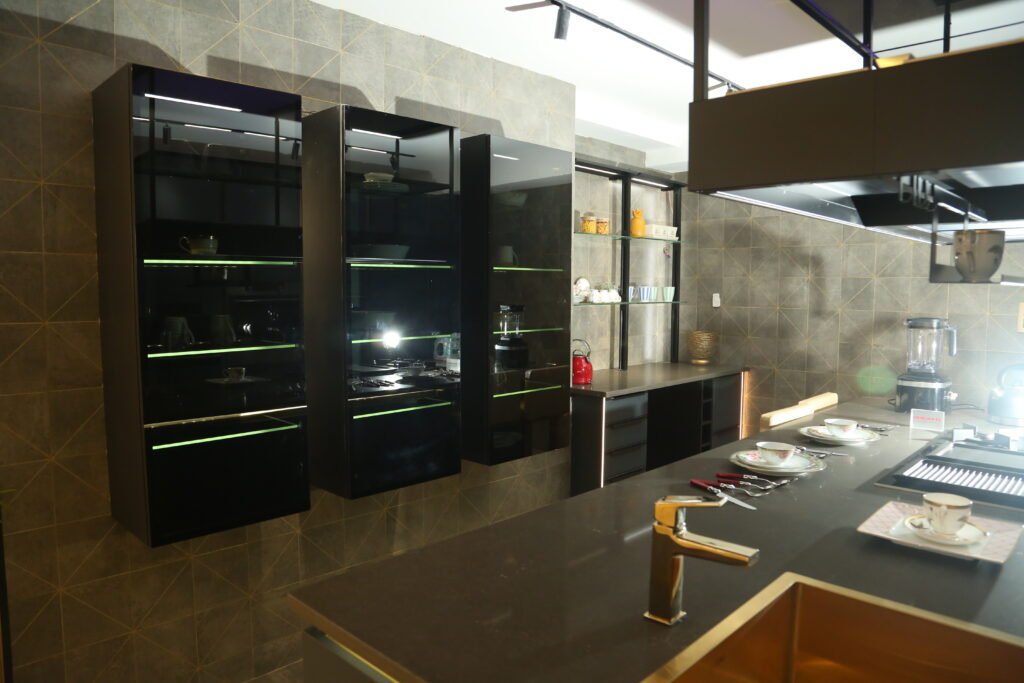
At TTC’s premium tile showroom in Gurgaon, the specification conversation for large format tiles covers format selection relative to room dimensions, finish selection relative to application area and maintenance expectation, grout joint width and colour relative to the design intent, substrate requirements and installation tolerances, and coordination with adjoining materials like sanitaryware, cabinetry, wall finishes, to ensure that the tile selection works as part of a complete interior rather than in isolation.
Evaluating Tile Selection for Luxury Homes at TTC
The distinction between a luxury tiles showroom in Gurugram that stocks premium products and one that genuinely supports specification is what TTC was built around. NITCO Tiles’ range at TTC covers the full spectrum of large format applications.
TTC’s team engages with the project context rather than simply presenting a catalogue. Format, finish, application, installation considerations, and coordination with the broader interior are all part of the same conversation.